
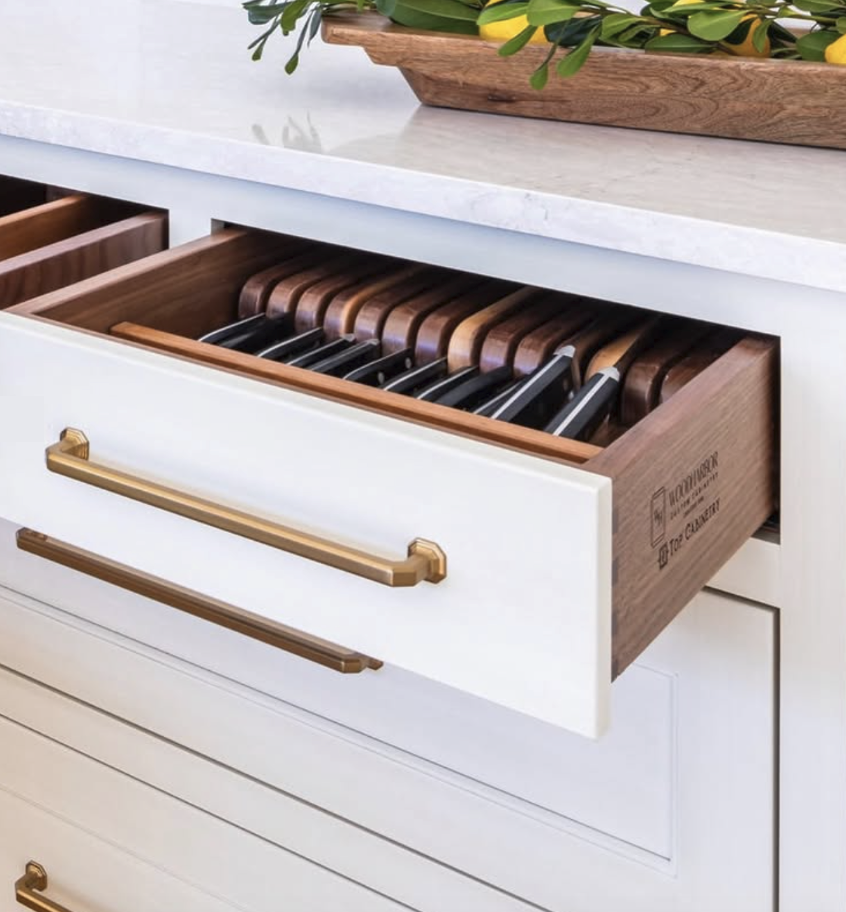
A well-designed kitchen often makes its first impression through what can be seen: the cabinet door style, finish, color and the way each element works with the room. Yet some of the details homeowners appreciate most are found behind the doors.
The 2026 U.S. Houzz Kitchen Trends Study found that 94% of homeowners who add or replace cabinetry incorporate built-in specialty storage. The finding reinforces something kitchen designers and dealers see every day: homeowners want cabinetry that looks beautiful and makes the kitchen easier to live in.
Cabinet interiors have become part of the design
Specialty storage is no longer an occasional addition. According to the Houzz study, 64% of homeowners upgrading their cabinets include waste and recycling pullouts. Dedicated storage for cookie sheets and trays follows at 55%, while 41% incorporate spice storage. Cutlery and microwave storage are each selected by 38%.
These features may be hidden when the doors are closed, but they influence how the kitchen works every day. They can reduce countertop clutter, keep frequently used items within reach and give everything a more natural place.
That functional value is becoming more important throughout the renovation. Thirty-eight percent of respondents said kitchen deterioration or dysfunction helped trigger their project, up three percentage points from the previous year. Homeowners are not only looking for an updated space. They want a kitchen that works better for the way they live.
Designers are looking beyond the doors
Experienced designers know that thoughtful storage starts with listening. Understanding how a homeowner cooks, gathers and organizes the kitchen helps reveal which interior features will add the most value.
Those conversations often explore questions such as:
- Which items does the homeowner use most frequently?
- What tends to collect on the countertops?
- Would drawers, pullouts or vertical dividers improve access?
- Which appliances need a dedicated location?
- How might the household’s storage and accessibility needs change over time?
There is no single configuration that works for every homeowner. That is where the designer’s knowledge and the dealer’s understanding of available cabinetry options become especially valuable.
When those needs are considered early, interior storage can become a natural part of the overall design rather than something added after the layout has been established.
Cabinetry can support changing needs
The Houzz study also found that 41% of renovating homeowners are considering the future needs of aging household members. Among those planning for aging in place, pullout cabinets are the most common kitchen feature, selected by 59%.
Pullouts can reduce the need to reach into deep base cabinets. Wide drawers can keep cookware visible and accessible. Thoughtful placement can make everyday storage easier to use without changing the character of the room.
Designers are uniquely positioned to incorporate these details in ways that feel natural to the home and personal to the homeowner.
Exterior design and interior function work together
Appearance remains an important part of cabinet selection. The Houzz study found that look and feel are the leading reason homeowners choose a cabinet material, cited by 72% of respondents. Functionality follows at 45%, ahead of durability and cost.
These priorities do not need to compete. Door styles, wood species and finishes establish the character of the kitchen. Interior configurations help the cabinetry support real routines once the project is complete.
The best results come when both are considered together, supported by designers who understand the homeowner and cabinetry partners that provide the flexibility to carry out the vision.
Supporting thoughtful design from the outside in
Across WoodHarbor Custom Cabinetry, Countryside Cabinets and Wellborn Forest, we value the expertise dealers and designers bring to every project. They understand their customers, recognize opportunities within the space and translate individual needs into cabinetry that feels personal.
Our role is to support that work with cabinetry options and capabilities that help bring the complete design to life, including the details that may not be immediately visible.
The exterior may create the first impression. The interior often determines how well the kitchen works for the people who live there.
Suggested internal links
- Explore Our Brands: https://wfcabinetrybrands.com/our-brands/
- Dealer and Designer Spotlights: https://wfcabinetrybrands.com/dealers/
- Become a Dealer: https://wfcabinetrybrands.com/become-a-dealer/
Source: 2026 U.S. Houzz Kitchen Trends Study: https://www.houzz.com/magazine/2026-u-s-houzz-kitchen-trends-study-stsetivw-vs~184213864